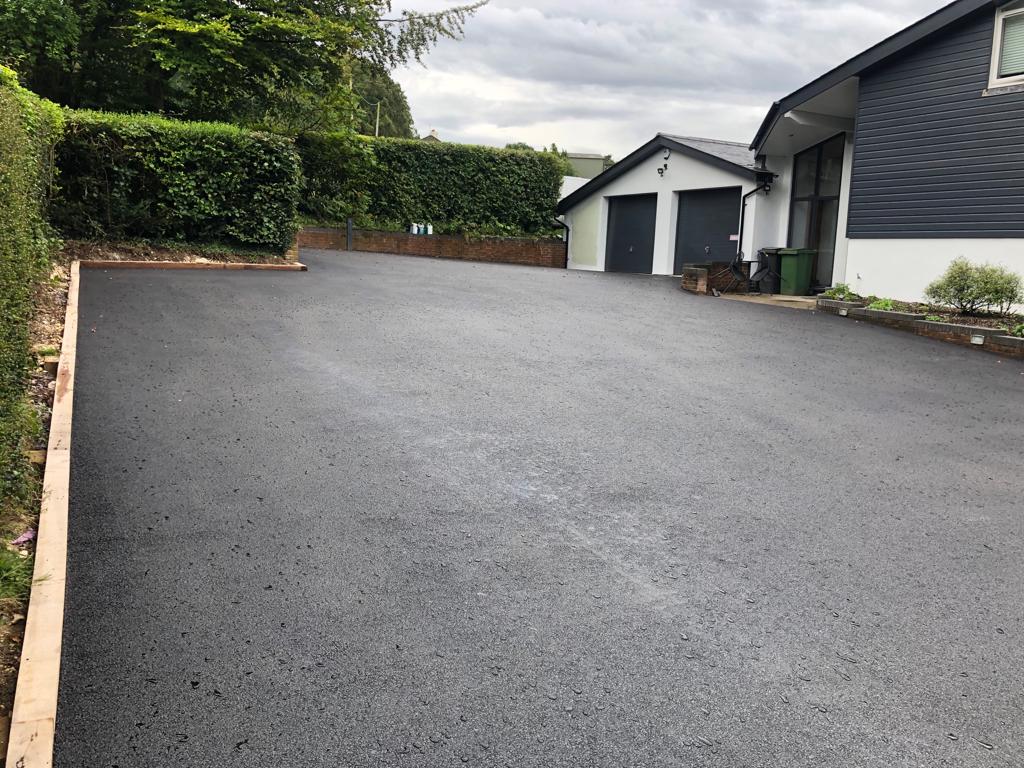
Commercial asphalt surfaces work hard. Car parks, access roads, loading areas and other high-use pavements can experience continuous vehicle movements, turning forces, weather exposure and occasional heavy loads. Over time, even a well-constructed surface can begin to look tired, develop cracking or lose the smooth finish it once had.
When the underlying pavement remains structurally sound, asphalt resurfacing can often restore an ageing commercial surface without the need to reconstruct the entire pavement. The important factor is determining whether deterioration is primarily affecting the upper asphalt layer or whether problems have developed deeper within the pavement structure.
At Tamworth Road Tek, we provide professional asphalt resurfacing and pavement solutions throughout Tamworth, NSW. A careful assessment of the existing surface allows the appropriate preparation and resurfacing approach to be determined before work begins.
What Is Asphalt Resurfacing?
Asphalt resurfacing involves renewing an existing pavement by preparing the current surface and installing a new asphalt layer over it.
Unlike complete reconstruction, resurfacing makes use of pavement layers that remain structurally suitable. The existing surface may require repairs, cleaning, levelling or other preparation before new asphalt is installed.
When completed under appropriate conditions, resurfacing can provide a renewed wearing surface while retaining the useful structural components of the existing pavement.
The result can be a smoother, more consistent commercial surface capable of continuing to support everyday vehicle movements.
What Does a Tired Commercial Surface Look Like?
A commercial pavement does not need to contain major potholes before its condition deserves attention.
Deterioration usually develops progressively. Recognising these changes before widespread failure occurs can provide more options for restoring the surface.
Typical signs include:
- General surface weathering
- Fine or moderate cracking
- Faded and worn asphalt
- Minor depressions
- Previous repair patches
- Localised surface deterioration
- Reduced driving quality
- Early edge wear
These conditions should be professionally assessed because their appearance alone does not confirm whether resurfacing is appropriate.
Resurfacing Works Best When the Foundation Is Still Sound
The most important question is what condition the pavement is in underneath the visible asphalt.
A commercial pavement is constructed in layers. The asphalt provides the wearing surface, but much of the structural support comes from the prepared pavement layers below.
If those supporting layers remain stable, resurfacing may provide an effective way to renew the surface.
However, if the base has become weak, saturated or significantly deformed, installing new asphalt directly over the problem will not correct the underlying failure.
This distinction is why pavement assessment should come before deciding to resurface.
Existing Damage Needs to Be Repaired First
Resurfacing should not be treated as a method of hiding defects.
Potholes, unstable patches and significantly deteriorated sections should be corrected before the new asphalt layer is installed.
Depending on the pavement condition, preparation may involve removing failed material, rebuilding localised sections, restoring base support and compacting repaired areas.
This creates a more consistent foundation for the resurfacing work.
If existing structural defects are simply covered, movement underneath can eventually affect the new asphalt above.
Cracking Can Reveal What Is Happening Underneath
Not all asphalt cracks mean the same thing.
A limited amount of surface cracking may be associated with normal ageing, while widespread interconnected cracking can indicate more substantial pavement deterioration.
Cracks can also provide pathways for water to enter the supporting layers.
A professional assessment considers the pattern, location and severity of cracking rather than simply noting that cracks are present.
Where necessary, affected areas can be repaired before resurfacing proceeds.
Potholes Require More Than a New Surface Layer
Potholes are an obvious sign that part of the pavement has already failed.
Installing new asphalt over an untreated pothole does not restore the missing structural support underneath it.
The deteriorated section needs to be assessed so loose or unstable material can be removed and the pavement rebuilt appropriately.
Once repairs are stable and properly compacted, the wider surface can be prepared for resurfacing.
Addressing these localised failures properly helps create a more uniform finished pavement.
Resurfacing Can Improve Vehicle Movement
Commercial pavements often carry considerably more traffic than a typical residential driveway.
As surfaces deteriorate, drivers may begin slowing down or altering their path to avoid depressions, patches and damaged sections. Delivery vehicles and other traffic may also need to manoeuvre around potholes.
A professionally resurfaced pavement provides a smoother and more predictable driving surface.
This can improve movement through:
- Car parks
- Commercial entrances
- Internal access roads
- Loading areas
- Turning zones
- Vehicle parking areas
For a busy commercial property in Tamworth, improving pavement consistency can make everyday access more straightforward.
Surface Levels and Drainage Need Careful Attention
Resurfacing changes the pavement surface, which means levels and drainage must be considered during planning.
Simply adding asphalt without considering existing low areas may leave drainage problems unresolved.
Standing water can accelerate pavement deterioration by entering cracks and weakening supporting material. It can also indicate that the pavement profile is no longer directing runoff effectively.
Before resurfacing, contractors should assess whether water is collecting in depressions or travelling towards vulnerable sections.
Where required, corrective preparation can improve surface levels before the new asphalt is installed.
Existing Drainage Problems Should Not Be Covered
If water consistently pools in one area, the reason should be investigated before resurfacing.
The problem may relate to pavement settlement, poor grading or localised deformation.
Restoring suitable levels as part of the resurfacing process can help the renewed pavement manage water more effectively.
Commercial Traffic Places Different Demands on Asphalt
The way a commercial pavement is used should influence how resurfacing work is planned.
Passenger vehicles, delivery trucks and heavier commercial traffic place different loads on the pavement. Repeated turning, braking and stationary loading can also create concentrated stresses.
High-demand areas can include entrances, loading zones, turning points and frequently travelled wheel paths.
An experienced contractor considers these traffic patterns when assessing pavement condition and determining the appropriate resurfacing approach.
Edge Condition Should Be Assessed Too
The centre of a commercial pavement is not the only area that matters.
Weak or crumbling edges can allow deterioration to gradually move further into the surface. If surrounding material has eroded, the asphalt may lose lateral support and become vulnerable to cracking under traffic.
Edge defects should therefore be inspected and repaired where necessary before resurfacing.
Creating appropriate support around the pavement perimeter contributes to the performance of the renewed surface.
Resurfacing Can Create a More Consistent Commercial Environment
A heavily patched pavement can remain usable while gradually becoming less consistent.
Different repair areas may have varying levels, textures and ages. Over time, the surface can begin to look fragmented while also becoming less comfortable for vehicles to travel across.
Resurfacing provides an opportunity to create a more uniform wearing surface across a larger area.
This can improve both the functionality and overall presentation of the commercial property without treating every ageing section as an isolated problem.
When Is Complete Reconstruction More Appropriate?
Asphalt resurfacing has clear benefits, but it is not suitable for every deteriorated commercial pavement.
If extensive structural failure has developed underneath the asphalt, more substantial reconstruction may be necessary.
Warning signs can include widespread severe cracking, extensive rutting, significant settlement, numerous recurring potholes and movement across large sections of pavement.
In these circumstances, the problem is no longer limited to the wearing surface.
The failed pavement may need to be removed so the underlying structure can be corrected before new surfacing is installed.
Why Timing Matters with Asphalt Resurfacing
Waiting until a commercial surface has completely broken apart can reduce the available maintenance options.
Resurfacing is most valuable when deterioration is identified while the supporting pavement still has useful structural integrity.
Early assessment allows developing defects to be identified and repaired before water and traffic cause more extensive damage.
Rather than viewing resurfacing only as a response to severe deterioration, it can form part of a planned approach to preserving a commercial pavement.
Professional Preparation Determines the Quality of the Result
A successful asphalt resurfacing project begins well before the new asphalt arrives.
The existing pavement should be inspected to determine its condition and identify areas requiring additional work.
Preparation may include localised pavement repairs, crack treatment, correction of surface irregularities, drainage improvements and thorough cleaning.
The objective is to create suitable conditions for the new asphalt layer to perform consistently.
Professional resurfacing therefore involves much more than applying fresh asphalt over an old surface. It requires understanding what has caused the existing pavement to deteriorate and addressing relevant problems first.
Conclusion
Asphalt resurfacing can restore a tired commercial surface when the underlying pavement remains structurally suitable. It can renew worn asphalt, provide a smoother driving surface, improve overall consistency and help protect the pavement from further deterioration.
However, the condition underneath the surface is critical. Potholes, unstable sections, drainage problems, significant cracking and weak pavement areas should be identified and corrected before resurfacing takes place. Where extensive structural failure is present, deeper reconstruction may be a more appropriate solution.
Tamworth Road Tek provides professional asphalt resurfacing, pavement repairs and bitumen surfacing throughout Tamworth, NSW. If your commercial asphalt surface is becoming worn, cracked or increasingly difficult to maintain, contact our team to arrange an assessment and discuss whether resurfacing is suitable for restoring a dependable, professional-quality pavement.
Call us on: 02 5301 9087
Click here to find out more about Tamworth Road Tek
Click here to complete our contact form and see how we can help with your Asphalt and Bitumen Surfacing needs.